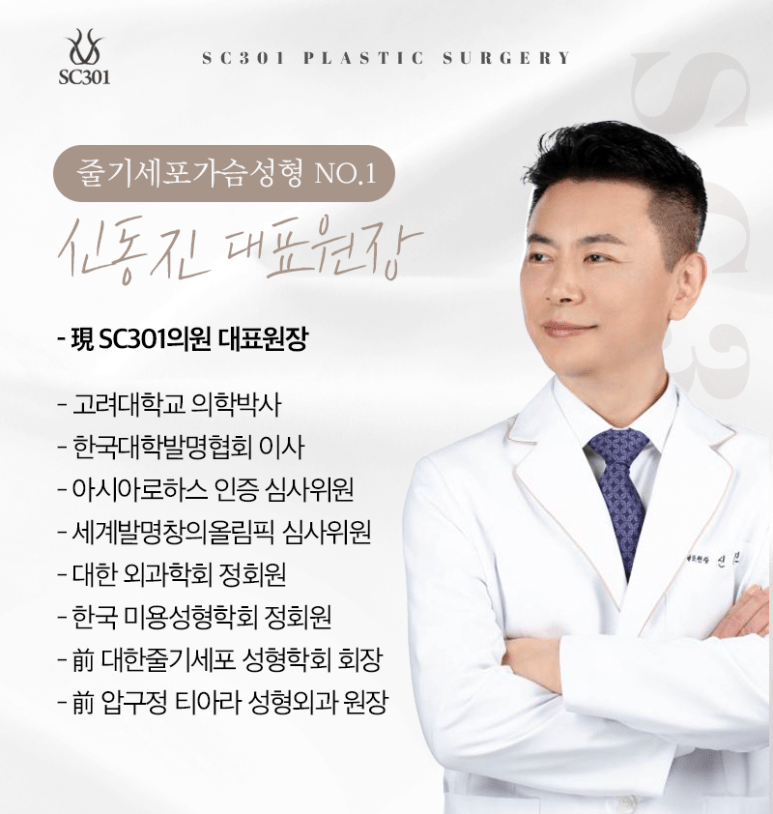
In recent years, breast fat grafting has evolved beyond simple volume augmentation
into a more refined procedure that considers individual anatomy and tissue condition.
In particular, SVF (Stromal Vascular Fraction)-assisted fat grafting has gained attention
as it incorporates cellular components within adipose tissue,
supporting a more sophisticated and biologically informed approach.
This article provides a professional overview of
the principles and characteristics of SVF-based breast fat grafting.
What is SVF (Stromal Vascular Fraction)?
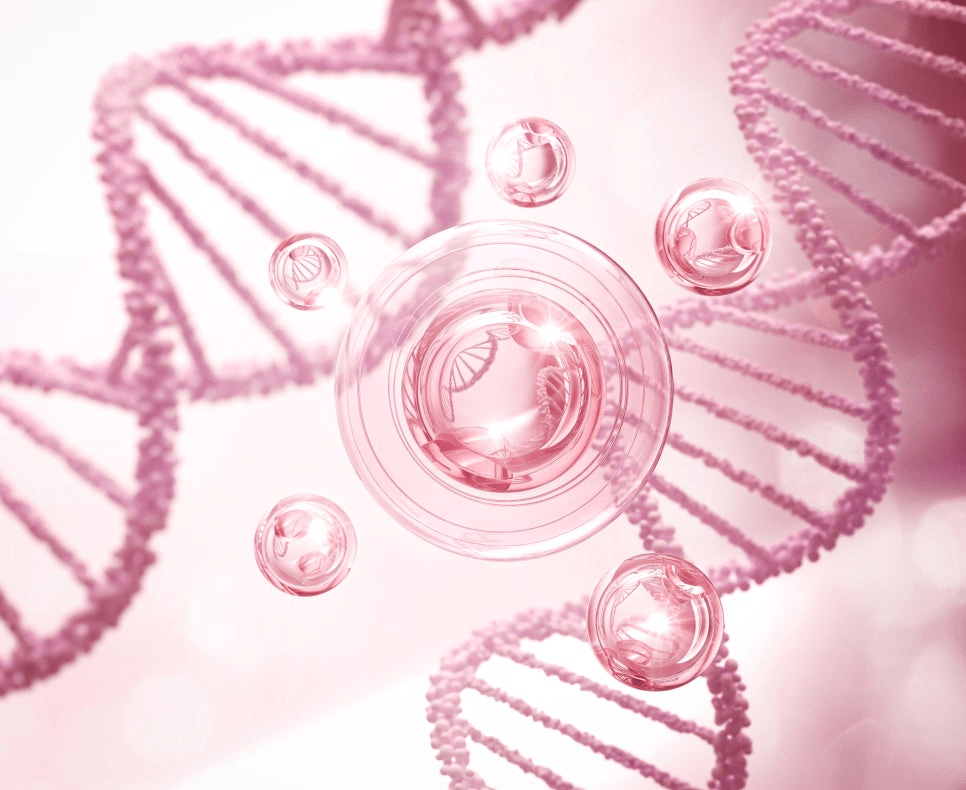
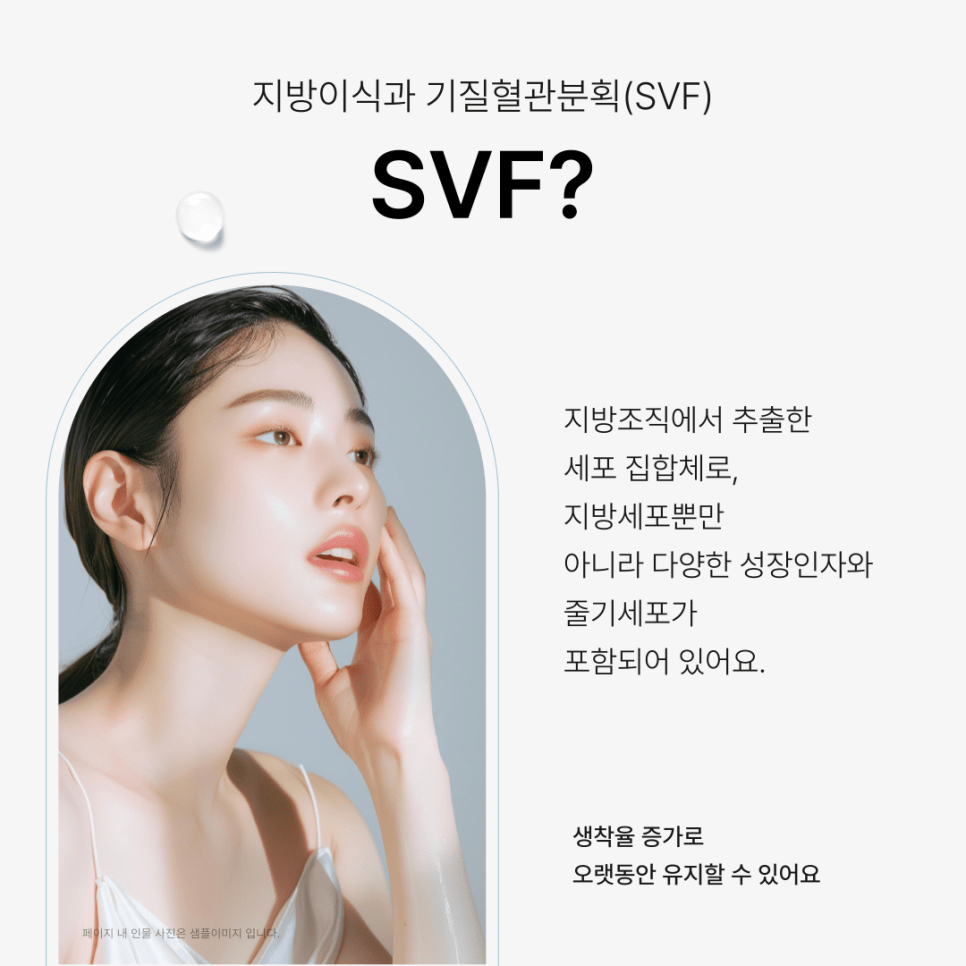
SVF refers to a heterogeneous cell population found within adipose tissue,
excluding mature adipocytes (fat cells).
It typically includes:
- Adipose-derived stem cells (ADSCs)
- Endothelial cells
- Fibroblasts
- Immune-related cells
These cellular components are known to play roles in
tissue regeneration, angiogenesis (microvascular formation), and graft stabilization.
Thus, SVF-assisted fat grafting can be understood as
a biologically enhanced technique that goes beyond conventional fat transfer.
Procedure: SVF-Assisted Breast Fat Grafting

The overall workflow is similar to traditional fat grafting,
with an additional step for SVF isolation.
Process Overview
- Harvesting autologous fat (e.g., abdomen, thighs)
- Isolation and purification of SVF from harvested fat
- Mixing purified fat with SVF
- Multi-layered injection into the breast tissue
Key procedural considerations include:
- Minimizing adipocyte damage
- Maintaining a controlled cell-processing environment
- Ensuring even distribution during injection
Why SVF-Based Breast Fat Grafting is Gaining Attention

1. Enhanced Graft Environment
SVF components may contribute to
a more favorable microenvironment for fat survival and integration.
2. Natural Texture and Contour
Since autologous tissue is used,
the result tends to reflect the patient’s native tissue characteristics,
leading to a more natural feel and appearance.
3. Reduced Risk of Foreign Body Reaction
Unlike implants,
this approach relies entirely on the patient’s own tissue,
which may reduce concerns associated with foreign materials.
Indications and Suitable Candidates
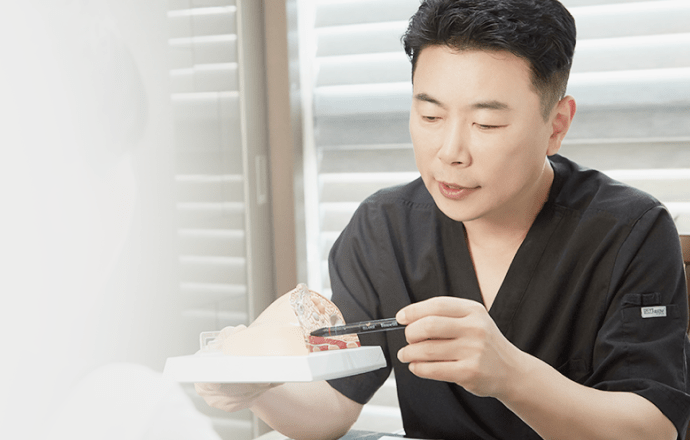
Breast fat grafting may be considered in the following cases:
- Preference for natural augmentation over implants
- Volume loss after pregnancy or weight changes
- Desire for subtle contour refinement
- Need for personalized, anatomy-based correction
However, suitability depends on:
- Available donor fat volume
- Skin elasticity
- Overall body composition
A thorough consultation is essential.
Key Considerations Before the Procedure

For optimal outcomes, patients should evaluate:
- Desired outcome vs. realistic expectations
- Adequacy of donor fat
- Clinical experience and case portfolio of the practitioner
- SVF processing protocol and facility standards
- Post-procedure care system
Particularly in cell-assisted procedures,
precision in processing and clinical protocol is critical.
SC301’s Clinical Approach
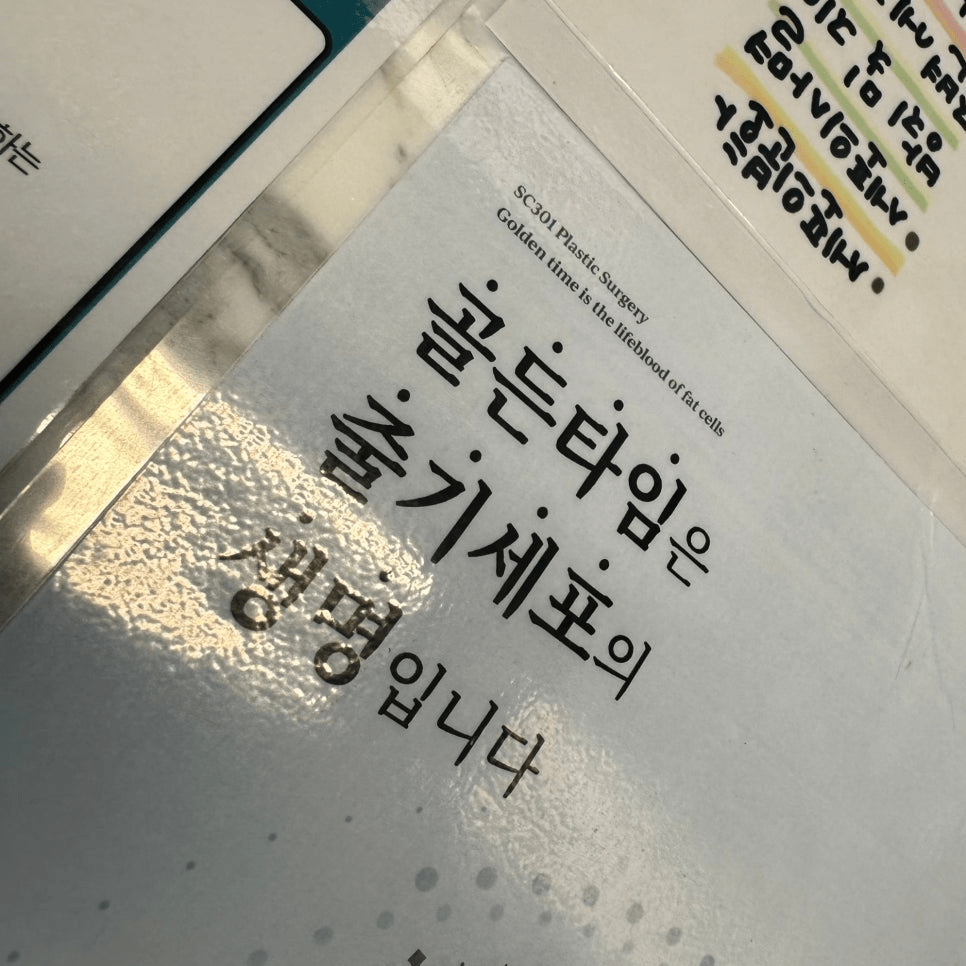
SC301 focuses on
fat and cell-based procedures in anti-aging and volume restoration.
Their approach includes:
- Data-driven analysis of fat graft survival
- Controlled SVF isolation and processing systems
- Customized treatment planning based on clinical cases
Additionally, publications in SCI-indexed journals
reflect their commitment to research-based practice.
The Evolution of Breast Fat Grafting
Breast fat grafting is no longer limited to volume enhancement.
It is evolving into a procedure that integrates
biological environment, tissue response, and long-term stability.
SVF-assisted fat grafting represents:
- A biologically informed technique
- A focus on natural outcomes
- Use of autologous tissue for enhanced compatibility
As with any medical procedure,
outcomes vary depending on individual conditions.
Careful consultation and informed decision-making remain essential.
 SC301의원
댓글 남기기