Arm Liposuction Review: A Systematic Approach to Achieving a Slim Arm Contour & Choosing the Right Clinic

The overall silhouette of the upper body is often determined not simply by body weight, but by fat distribution and contour balance across specific areas. Among these, the upper arms play a significant visual role, where even subtle changes can noticeably impact one’s appearance.
In particular, the posterior upper arm (triceps area) and the region near the armpit are prone to localized fat accumulation. These areas are often resistant to diet and exercise, which is why many individuals consider arm liposuction as an effective solution for contour refinement.
Why Arm Liposuction? Anatomical Considerations

The upper arm has several unique characteristics:
- Thin skin with a higher tendency for reduced elasticity
- Uneven fat distribution with localized accumulation
- Susceptibility to sagging due to gravity
For these reasons, arm liposuction is not merely about fat removal.
It requires a comprehensive and precise approach that considers fat volume, skin elasticity, and muscle structure.
Importance of Preoperative Assessment

A thorough and individualized assessment is essential before planning the procedure:
- Thickness and distribution of subcutaneous fat
- Degree of skin laxity and elasticity
- Muscle mass and structure
- Continuity with adjacent areas (e.g., axillary fat, back line)
Excessive fat removal can lead to skin sagging if elasticity is insufficient. Therefore,
strategic preservation of an appropriate amount of fat is crucial.
The ultimate goal is not just circumference reduction, but
creating a smooth, natural contour from the shoulder to the elbow.
Post-Procedure Recovery Mechanism
Following the procedure, the body undergoes tissue recovery and restructuring.
Common early responses include:
- Tenderness due to newly formed subcutaneous space
- Swelling from inflammatory processes
- Bruising from minor vascular disruption
These are part of the normal healing process and typically improve with proper care.
✔️ Early Recovery Guidelines
- Cold compress within the first 48 hours → reduces swelling and discomfort
- Limited arm movement → supports tissue stabilization
- Gentle distal joint movement → promotes circulation
Functional Role of Compression Garments
Compression garments play a critical role in recovery:
- Promote adhesion between skin and underlying tissue
- Reduce fluid retention and swelling
- Support tissue remodeling
- Protect the treated area
They are typically recommended for about 4 weeks.
Proper fit is essential, as excessive compression may impair circulation.
Progression of Bruising and Swelling
Due to dense vascular distribution, bruising and swelling may be more noticeable in the arms.
- Color transition (red → purple → yellow)
- Downward migration due to gravity
These changes are part of the natural healing process.
Warm compresses and light activity can help stimulate lymphatic drainage and recovery.
Potential Risks and Considerations
While arm liposuction is generally considered safe, potential risks include:
- Irregular surface contour due to uneven fat removal
- Skin laxity if contraction is insufficient
- Temporary sensory changes (numbness or tingling)
- Rare cases of infection or inflammation
These risks can be significantly minimized through
experienced practitioners, precise technique, and structured aftercare.
Timeline for Visible Results & Maintenance
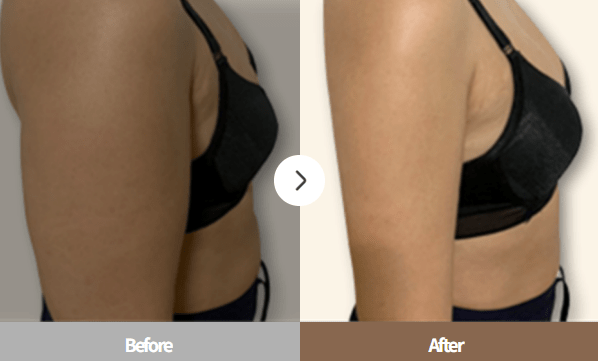
Final results are not immediate and typically develop over 3 to 6 months:
- Reduction of swelling
- Tissue stabilization
- Skin contraction
As a result, patients can observe a more defined and streamlined arm contour.
However, while fat cell numbers decrease, remaining cells can still enlarge.
Maintaining results requires consistent diet and regular exercise.
Key Criteria for Choosing a Liposuction Clinic

To ensure both safety and optimal outcomes, consider the following four factors:
1. Consistency Between Consultation and Surgery
The same medical professional should oversee both stages to ensure alignment between expectations and results.
2. Use of Micro-Cannulas
Cannulas in the 2–3 mm range allow:
- Minimal tissue trauma
- Reduced scarring
- More precise contouring
3. Structured Postoperative Care System
Post-surgical care plays a critical role in determining the final contour and recovery quality.
4. Controlled Daily Surgical Volume
Limiting the number of procedures per day helps maintain
surgeon focus, precision, and patient-specific attention.
Arm liposuction is not simply a fat reduction procedure, but rather
a comprehensive process combining anatomical precision, aesthetic design, and recovery management.
With a personalized approach, thorough consultation, and proper aftercare,
patients can achieve natural, balanced, and satisfying results.
 SC301의원
댓글 남기기