When considering breast augmentation,
patients often have concerns beyond the procedure itself—particularly regarding imaging, safety, and long-term outcomes.
In clinical consultations, the following questions are frequently raised:
- Is SVF breast augmentation detectable on imaging studies such as X-rays?
- Does it interfere with breast cancer screening?
- What is the expected retention rate and longevity?
This article provides a structured, evidence-based overview of
SVF breast augmentation (autologous fat grafting with stromal vascular fraction) and its clinical considerations.
Overview of SVF Breast Augmentation
SVF (Stromal Vascular Fraction) breast augmentation involves
the use of autologous fat tissue in combination with adipose-derived cellular components.
This approach is designed to address limitations of conventional fat grafting,
with a focus on improving the biological environment for graft survival.
Unlike implant-based augmentation,
this method does not involve synthetic materials.
As a result, it is often discussed in the context of
enhanced biocompatibility and more natural aesthetic outcomes.
1. Detectability on X-ray and Imaging Studies
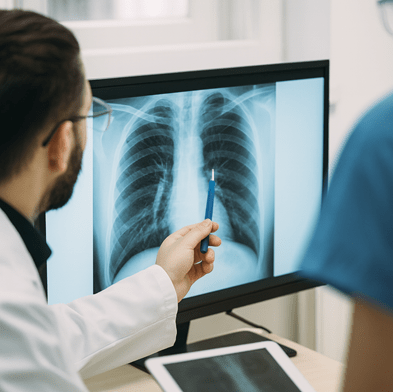
From a clinical perspective,
SVF breast augmentation utilizes autologous tissue.
Therefore, it is generally not identifiable as a distinct foreign structure on standard chest X-rays.
In contrast, implant-based augmentation may show visible contours on radiographic imaging.
With SVF procedures, the transferred fat integrates into native tissue,
making it difficult to distinguish from surrounding structures.
However, it is important to note that:
- Fat necrosis
- Microcalcifications
may occasionally occur following fat grafting.
These findings can appear on imaging and require interpretation by experienced clinicians.
2. Impact on Breast Cancer Screening (Mammography & Ultrasound)
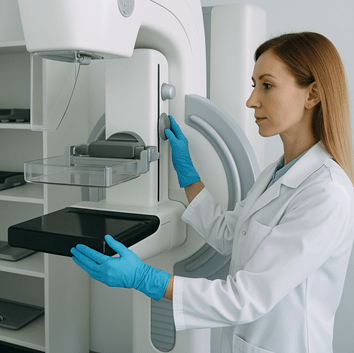
Breast cancer screening typically involves:
- Mammography (compression-based imaging)
- Ultrasound examination
Following SVF breast augmentation:
Routine breast cancer screening can be performed without restriction.
The compression applied during mammography is:
- Temporary
- Localized
and is generally not sufficient to alter grafted fat structure.
Therefore, significant risks such as:
✔ Volume loss
✔ Structural deformation
are considered minimal.
However, due to potential post-grafting changes such as:
- Microcalcifications
- Fat necrosis
It is strongly recommended to inform the radiologist of prior procedures before imaging.
3. Applicability in Transgender Patients

SVF breast augmentation may be considered in transgender patients,
but requires careful evaluation of several factors:
- Availability of sufficient donor fat
- Body fat distribution
- Effects of hormone therapy on breast tissue
In patients with low body fat:
Achieving the desired volume may be limited.
Additionally, in those undergoing hormone therapy:
Breast tissue response and anatomical changes must be taken into account.
Therefore:
Individualized surgical planning based on comprehensive assessment is essential.
4. Longevity and Fat Graft Retention

A critical factor in fat grafting is
the survival rate of the transplanted adipose tissue.
In conventional fat grafting:
Partial resorption is a known limitation.
SVF breast augmentation incorporates:
- Adipose-derived cellular components
- Consideration of angiogenesis (new blood vessel formation)
- Optimization of the graft microenvironment
This approach is designed to potentially improve graft retention.
However, clinical outcomes are influenced by multiple variables:
- Patient physiology
- Quality of harvested fat
- Surgical technique
- Postoperative care
- Weight fluctuations
Therefore, variability in long-term results should be expected.
SC301’s Protocol-Based Approach to SVF Breast Augmentation
Clinical outcomes in SVF breast augmentation depend not only on the procedure itself,
but also on the integration of a comprehensive treatment system.
At SC301, the protocol includes:
- Preoperative evaluation of fat quality
- Controlled fat harvesting and processing
- Layered, strategic graft placement
- Structured postoperative management
These steps are designed to support a stable graft survival environment.
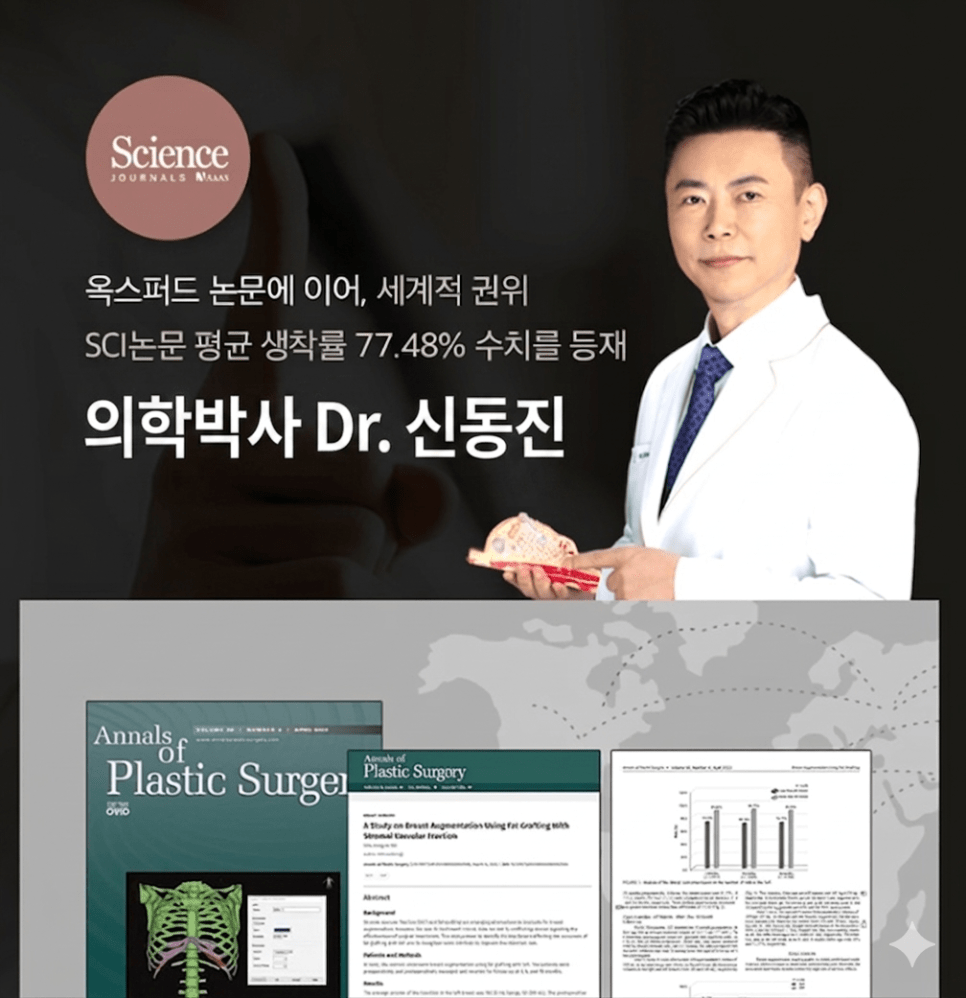
Furthermore, clinical data related to graft retention rates
have been published in SCI-indexed journals,
providing evidence-based support beyond anecdotal outcomes.

SVF breast augmentation may be considered
as an alternative for patients prioritizing natural outcomes and tissue compatibility.
However, as with any medical procedure:
Suitability varies depending on individual anatomical and clinical conditions.
It is important to evaluate:
- Imaging considerations
- Compatibility with breast cancer screening
- Expected longevity
- Individual body characteristics
A thorough consultation with a qualified medical professional is essential
to ensure an informed and appropriate decision.
 SC301의원
댓글 남기기